The residential and studio house in Seebüll, designed by Emil Nolde himself, is an outstanding artist’s house of modernism. From 2020 to 2022, the Nolde House was restored in accordance with monument preservation standards, technically upgraded and made accessible without steps for the first time.
Nolde House

View into Nolde’s colourful living spaces
In the 1920s, the almost sixty‑year‑old Nolde sought a new home. He chose Seebüll, within sight of his father’s farm. Together with his wife Ada, he created his “magic home”: the architecture according to his designs, the garden according to their shared ideas, and the interior partly self‑designed, partly handcrafted. The couple lived here until Ada’s death in 1946. Emil Nolde remained until his own death in 1956 and found his final resting place in the crypt in the garden beside his wife Ada.
The building, with its clear forms, recalls the Bauhaus architecture of the 1920s. Nolde deliberately set a contrast to the thatched Frisian farmhouses of the surroundings: the striking red‑brick building with narrow windows and a flat roof rises confidently from the flat landscape.
On the ground floor, original furnished living rooms can be seen. The studio impresses with the nine‑part major work The Life of Christ (1911/12). The Picture Hall, added in 1937, displays Nolde’s oil paintings in historical presentation.
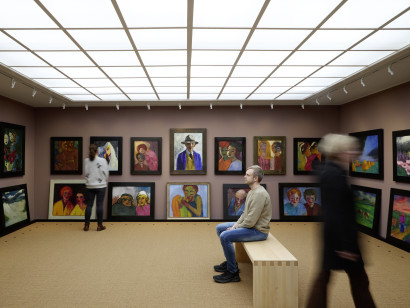
Picture Hall
In 1937, Nolde had the Picture Hall, six metres long and seven metres wide, built on top of his studio – a lifelong dream, as he himself said. Here he received selected guests to whom he showed his newest or favourite works. Above all, he examined for himself whether the works could stand next to one another.
In the annually changing exhibitions, more than 30 paintings are presented here. The pictures are set in dark frames and arranged in two rows – a density unusual for today’s viewing habits, entirely in Nolde’s spirit. The Nolde Museum follows his individual mode of presentation.
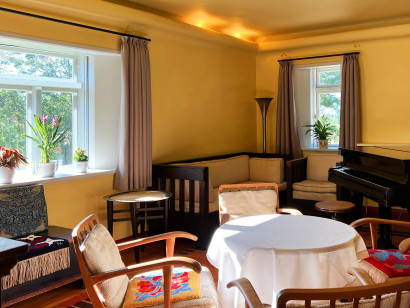
Living Rooms
The living rooms of the Nolde House are designed according to the course of the sun: the blue bedroom opens to the morning light in the east, the carmine‑red dining room faces south, and the sun‑yellow living room captures the warm light of the afternoon into the evening. Nolde’s wish to unite art and life inseparably is impressively reflected in this colourful interior design.
In the course of the restoration, the historical layers of paint and later alterations were carefully examined and documented. With the exception of the blue bedroom, all rooms are furnished with original pieces and can be viewed by visitors – an impressive celebration of colour.
