The garden in Seebüll was far more than just a place of recreation for Emil and Ada Nolde – it was a source of inspiration and an expression of their shared joy in design. With great dedication and deep connection to nature, they created a unique artist’s garden to the south of the residential and studio house. What today delights as a blooming paradise garden is the result of their careful planning and loving attention.
Nolde’s Garden – A Paradise

Summer floral splendour at the Seebüllchen
Wherever Emil and Ada Nolde settled, they lived with a cottage garden. When Nolde purchased Seebüll in 1926, the mound was surrounded by green grassland. Seebüll is the first garden designed entirely according to their ideas. To make the clay soil fertile for flowers, perennials, shrubs and fruit and vegetable plants, they improved the earth over the years. A reed fence and several rows of trees and bushes protect the garden from the relentless west wind. Several large beds together form the initials of the couple, A and E, connected by a birdbath with a water feature.
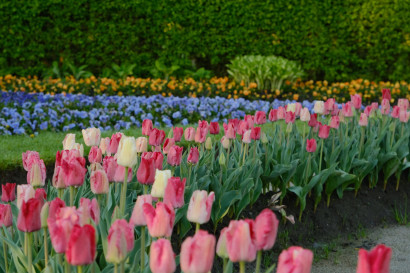
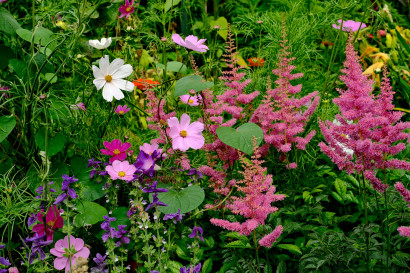
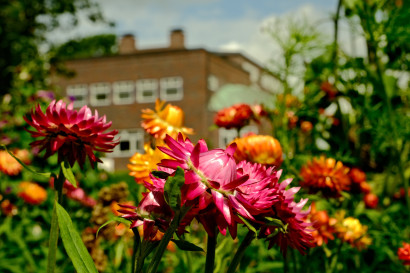
In the garden, Nolde painted radiant watercolours. His flower paintings in oil, however, were usually created in the studio. The garden shines in new colours in every season; its floral splendour reaches its peak from mid‑July to mid‑August and experiences a lush finale with the dahlias in late summer. The historic garden includes an extensive stock of perennials, supplemented by annual and biennial summer flowers.
The tree population is also remarkable: poplars, willows and hawthorn shape the landscape. They regulate the microclimate and provide shade. Alongside fruit trees such as pear, plum and quince, the rare apple varieties “Agathe von Klanxbüll” and the exclusive “Renette von Seebüll” grow here.
The Nolde couple created a garden artwork in Seebüll – shaped nature that blends into the North Frisian marsh landscape like a large painting.
Botanicum
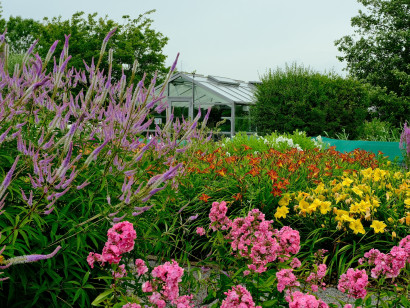
In the Botanicum greenhouse, the gardeners devote themselves to preserving the original plantings of the Nolde Garden. Here, offspring of the annual summer flowers and the perennials propagated by sowing or division sprout. Marigolds, mulleins, foxgloves and motherwort sustain themselves through self‑seeding and are allowed – as in Nolde’s time – to determine their location largely on their own.
In front of the Botanicum, offspring of the “Renette von Seebüll” as well as annual summer flowers and perennials such as cranesbill, viper’s bugloss and Turkish poppy can be purchased – a piece of Seebüll for your own garden or balcony. Hand‑selected seeds from the historic Nolde Garden are available in the museum shop.
In front of the Botanicum lies the mother‑plant quarter with established perennials that can compensate for losses in the Nolde Garden.

Impressions from the Garden


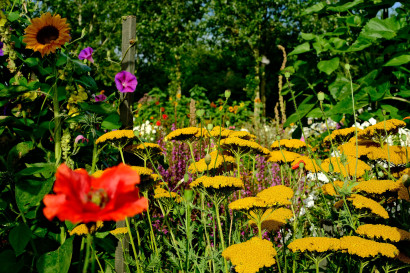
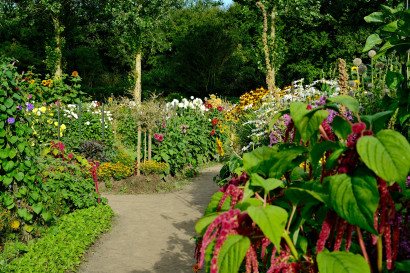
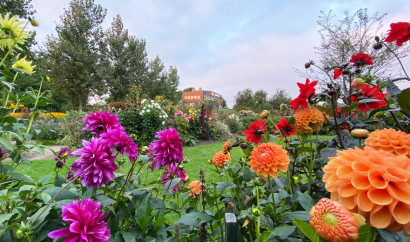
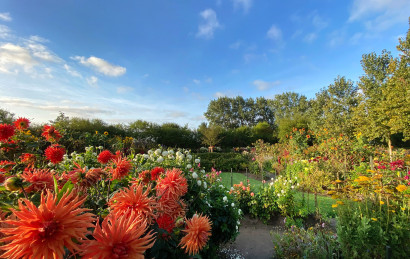
Seebüllchen
In the thatched garden house “Seebüllchen” (Little Seebüll), Emil and Ada often sought shelter in harsher weather and enjoyed their tea with a view of the floral splendour. Work was done here as well: while Emil Nolde wrote the first volume of his memoirs by hand in 1930 in Haus Kliffende on Sylt, Ada typed the manuscript. “Yesterday was the first little session with the typewriter in the garden house … At first your style is a bit heavy, but later it went well,” she wrote to him.
Today, Seebüllchen invites visitors to let their gaze wander over the garden in a nostalgic atmosphere, just as Emil and Ada Nolde once did.
