

Emil Nolde’s life in dates
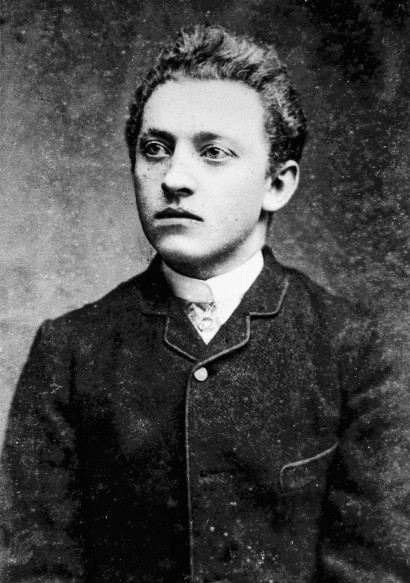
1867 Emil Hansen, born on 7 August as the son of a farmer in the village of Nolde (Schleswig). Trained as a wood sculptor and draughtsman.
1892–1897 St. Gallen: teacher at the Museum of Industrial and Applied Arts and Design. Decided to become a freelance painter.
1898 Nolde was rejected by the Munich Academy. As a consequence he attended Friedrich Fehr’s painting school.
1899 Decided to transfer to the Hölzel painting school in Dachau. In October, he moved to Paris, enrolled at the Académie Julian and undertook his
own studies at the Louvre.
1900 Walking trip through Denmark. In the autumn, he rented accommodation in Copenhagen.
1901 In Copenhagen. Summer stay in Lild Strand in Jutland.
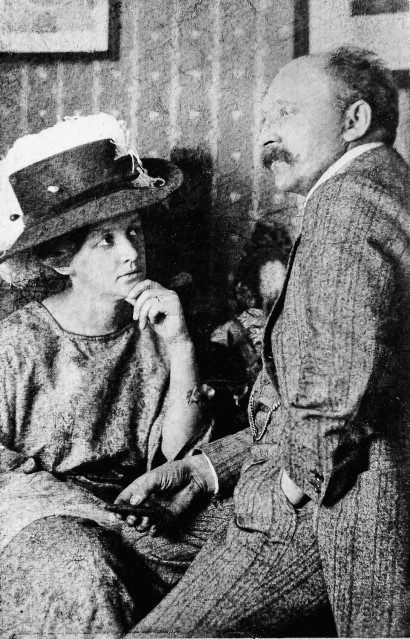
1902 Marriage to the Danish actress Ada Vilstrup. Name change from Hansen to Nolde.
1903 Lived in a fisherman’s cottage on the Baltic Sea island of Als with a shack on the seashore serving as his studio; winter months were usually
spent in Berlin.
1906 Member of Brücke artists’ group (until 1907).
1913/14 South Seas trip as a member of the Medical-Demographic German-New Guinea Expedition.
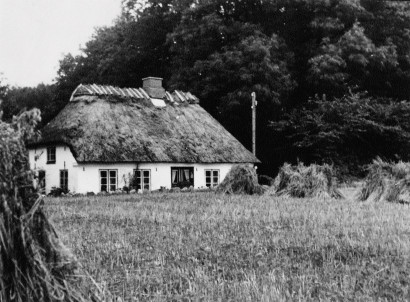
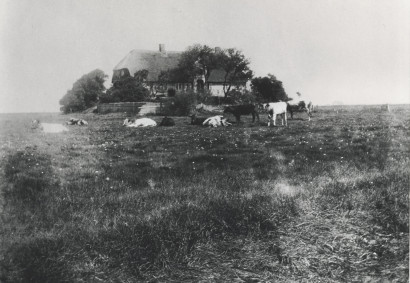
1916 Move to the farmhouse Utenwarf near Ruttebüll.
1919 Member of the ‘Working Council for Art’.
1920 Plebiscite in the German-Danish frontier region; Utenwarf becomes Danish, Nolde a Danish citizen.
1921 Max Sauerlandt writes a first monograph with Nolde’s active involvement. Journey to London, Plymouth, Paris, Toulouse, Barcelona, Granada, Madrid and Toledo. In August, exhibition of the religious pictures in Lübeck’s St. Catherine’s Church.
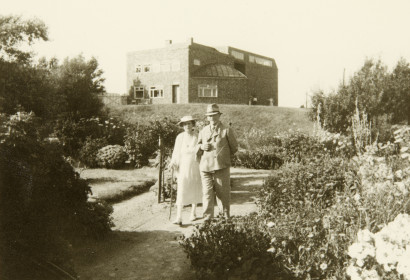
1927 Built his studio-residence in Seebüll (the Painting Gallery was added in 1937).
1931 Member of the Prussian Academy of the Arts.
1933 Nolde places great hopes in the National Socialists and, as a Danish citizen, becomes a member of the “National Socialist Working Group North Schleswig” (NSAN), an organisation of the German ethnic group in the Danish border region, which the following year is brought into line through the founding of the “National Socialist German Workers’ Party North Schleswig” (NSDAPN). He works on a plan that has not survived, which envisages a territorial solution to the so‑called “Jewish question” – a resettlement of the Jews – and which he intends to submit to Adolf Hitler.
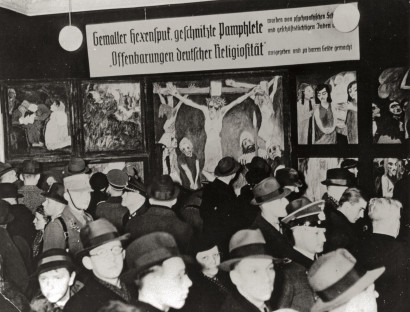
1937 Confiscation of 1,052 of Nolde’s works in German museums; some are shown in the exhibition “Degenerate Art”.
1938 Nolde writes several ingratiating letters, including one on 2 July to the Minister of Propaganda Joseph Goebbels.
1941 Expulsion from the “Reich Chamber of Fine Arts” and professional ban. Withdrawal to Seebüll. Further small‑format watercolours, the so‑called “Unpainted Pictures”, are created. Until the collapse of the “Third Reich”, Nolde remains a supporter of the National Socialist regime.
1946 Death of Ada Nolde.
1948 Marriage to Jolanthe Erdmann.
1956 Emil Nolde dies on 13 April in Seebüll. Establishment of the Foundation Seebüll Ada and Emil Nolde.
1957 Seebüll is opened to visitors according to the wishes of Ada and Emil Nolde. Joachim von Lepel, the director whom Nolde had chosen, organises the first anniversary exhibition entitled In Memory of Ada and Emil Nolde.
For more in‑depth reading we recommend our detailed biography of Emil Nolde. The booklet is available in the museum shop – or you can view it here as a PDF.